You know that feeling. You're physically in bed, but your mind is still at the office, replaying a conversation, or making tomorrow's to-do list. You try to meditate, but focusing on your breath feels like one more task. You're exhausted but wired. This is where Yoga Nidra for relaxation isn't just nice—it's necessary. It's not about doing; it's about undoing. Think of it as a system reboot for your nervous system, a guided journey into the twilight zone between wakefulness and sleep where deep healing happens. I've used it to claw back from burnout, and now I teach it. The biggest mistake beginners make? Trying too hard. This practice requires effortlessness.
What's Inside This Guide
What Exactly Is Yoga Nidra (And What It's Not)
Yoga Nidra means "yogic sleep." But you're not sleeping. You're lying down, comfortable, and being gently guided through a series of mental instructions. The goal is to enter a state of conscious deep sleep—where your body is completely at rest, but a sliver of awareness remains. It's like having one foot in dreamland and the other lightly touching the shore of wakefulness.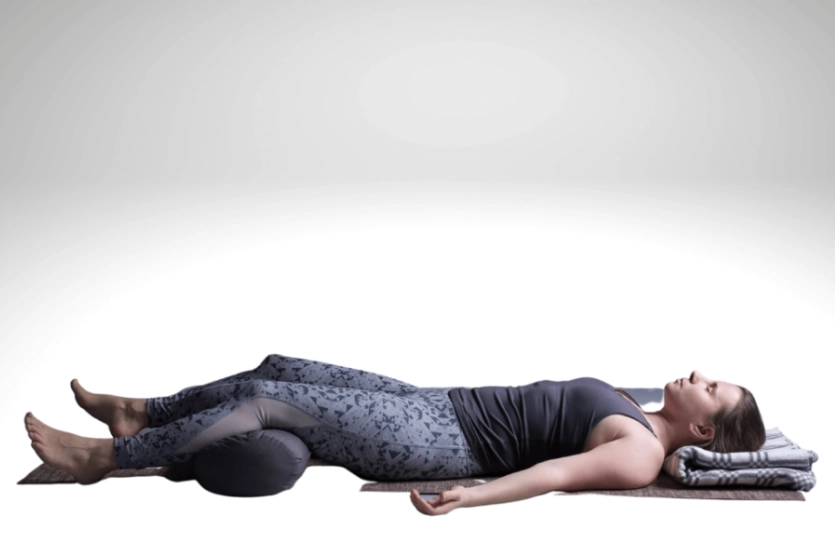
This is crucial: it's not mindfulness meditation. In mindfulness, you practice sustaining attention. In Yoga Nidra for relaxation, you practice systematic withdrawal. The guide's voice leads your awareness on a specific route—from the physical body to the breath, to emotions, to mental imagery—disentangling you from each layer. You're not trying to clear your mind. You're just following the roadmap. If thoughts come, they're just scenery outside the car window.
A Quick Comparison: Yoga Nidra vs. Other Relaxation Tools
Nap: Unconscious sleep. You might wake up groggy.
Mindfulness Meditation: Active observation of the present moment.
Progressive Muscle Relaxation: Focuses only on physical tension release.
Yoga Nidra: A structured, holistic journey inducing "non-sleep deep rest" (NSDR) that addresses mental, emotional, and physical layers simultaneously.
The Science Behind the Deep Rest
Why does lying still and listening to someone talk feel so transformative? The research points to tangible shifts in your brain and body. Studies using EEG have shown that Yoga Nidra practice increases alpha brain waves (linked to relaxed awareness) and theta waves (present in deep meditation and REM sleep), while decreasing beta waves (associated with active, analytical thinking).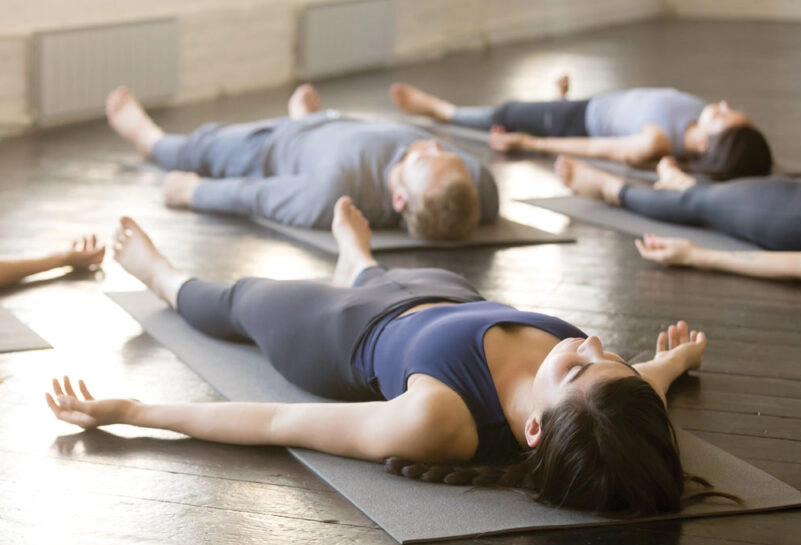
This shift has direct physical consequences. The practice activates the parasympathetic nervous system—your "rest and digest" mode. Your heart rate slows, blood pressure drops, and stress hormones like cortisol are reduced. A study published in the International Journal of Yoga Therapy found that a regular Yoga Nidra practice significantly reduced symptoms of anxiety and improved overall well-being. It's not just feeling relaxed; it's your body entering a measurable state of repair and integration.
Dr. Andrew Huberman, a neuroscientist at Stanford, has popularized the term Non-Sleep Deep Rest (NSDR), often citing Yoga Nidra scripts as a primary tool. He explains that this state can accelerate learning, improve sleep, and lower stress by facilitating specific neural pathways. It's like giving your brain a deep clean.
Your 20-Minute Yoga Nidra Practice for Relaxation
Here’s a breakdown of what happens in a typical session. Don't memorize it—just understand the flow so you can surrender to it.
Phase 1: Preparation (2-3 minutes)
Lie in Savasana (on your back, arms slightly away from your body, palms up). Use a pillow under your head, a bolster under your knees—whatever makes you feel supported and immobile. Cover yourself with a blanket. The drop in body temperature can pull you out of the practice. The instruction here is simple: "Make a resolution to remain still." This physical commitment signals safety to the brain.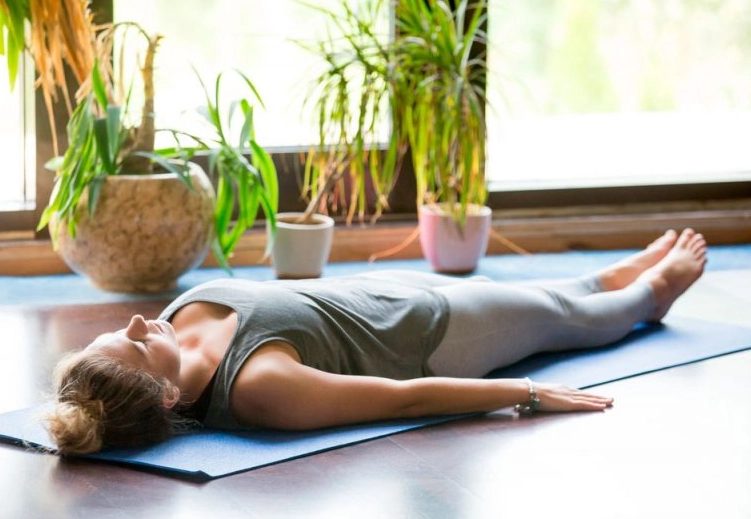
Phase 2: Setting Your Sankalpa (1 minute)
This is a positive, present-tense intention. Not a goal like "I will get a promotion," but a feeling-state like "I am calm and capable" or "I am enough." You'll be prompted to feel this intention in your heart center. Plant it like a seed.
Phase 3: Rotation of Consciousness (5-6 minutes)
The guide will name parts of the body in a specific order—right thumb, index finger, middle finger, palm, wrist, forearm, elbow... It's not a body scan where you feel sensations. It's more like a mental pointer. You're just hearing the word and knowing that part exists. If your mind wanders, the next body part brings you back. This phase trains focused awareness without effort.
Phase 4: Breath & Opposite Sensations (3-4 minutes)
You might be asked to notice the natural breath, or to visualize sensations like heaviness/lightness, warmth/coolness moving through the body. This deepens the dissociation from the physical form and engages the subconscious.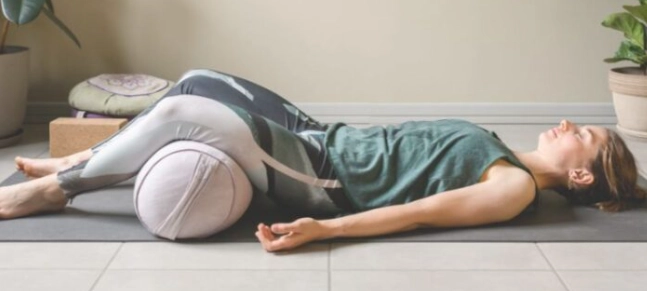
Phase 5: Visualization & Sankalpa Repetition (4-5 minutes)
You'll be led through neutral, soothing imagery—a peaceful forest, a calm beach. The images aren't the point; they're a vehicle to bypass the logical mind. In this receptive state, your Sankalpa is repeated, allowing it to sink into the subconscious.
Phase 6: Externalization & Return (2-3 minutes)
The guide gently brings awareness back to the room—the sounds, the feel of the body on the floor, the breath. You're instructed to move slowly. Rushing this ruins the effect. Roll to your side, pause, then sit up.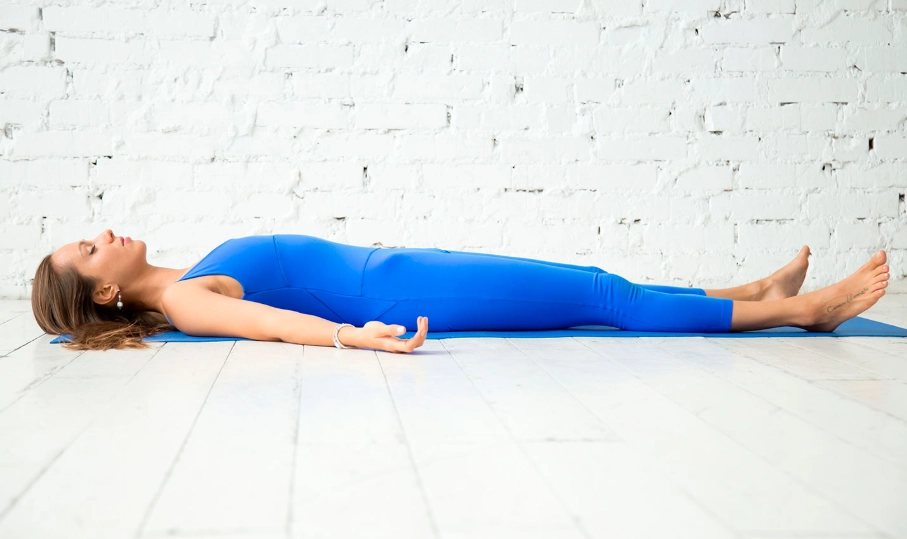
What Most Guides Don't Tell You: Common Pitfalls
After guiding hundreds of sessions, I see the same subtle errors that block people from the deepest rest.
1. The "Am I Doing It Right?" Monitor
You start analyzing the guide's voice or mentally critiquing the script. This is the thinking mind's last stand. The moment you notice that voice, you've already succeeded. The practice is the noticing, not the absence of thought. Gently return to the sound of the instructions.
2. Chasing a "Special" Experience
Some days you feel like you're floating. Other days, you're mentally planning dinner. Both are perfect sessions. The benefit is in the neurological shift, not in having a mystical experience. Judging a session as "bad" because you were distracted is like calling a workout bad because you sweat.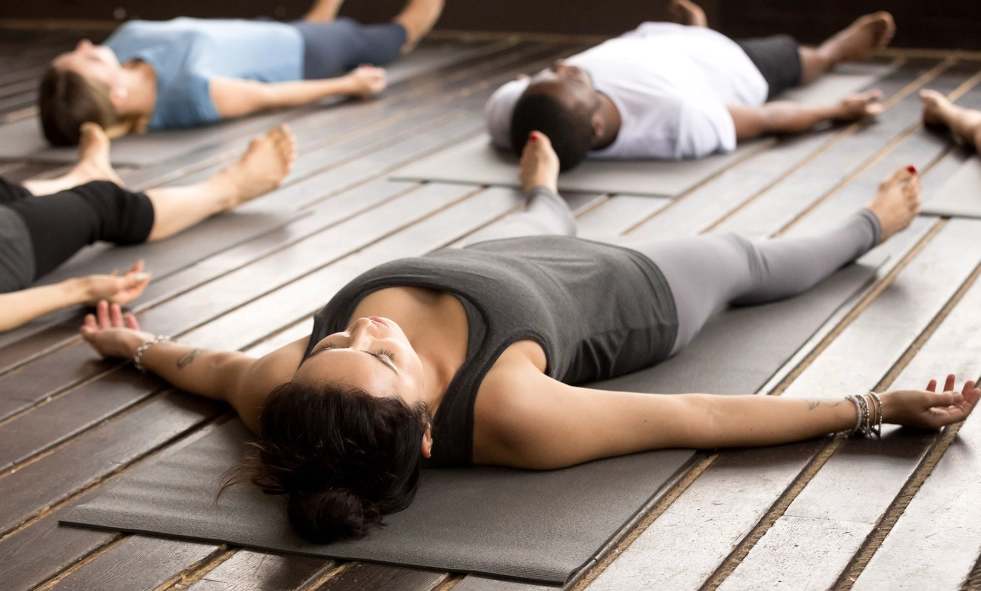
3. Poor Physical Setup
If your back is aching or you're cold, your mind can't let go. Invest in your nest. An eye pillow is a game-changer—the gentle pressure on the eyelids triggers the relaxation response via the vagus nerve. It's a simple trick with a profound effect.
How to Weave Yoga Nidra Into Your Real Life
You don't need a silent cave for 90 minutes. Integration is key.
The 10-Minute Reset: Can't sleep? Anxious before a meeting? Do a short session focusing only on the rotation of consciousness and breath. The Insight Timer app has thousands of short, free tracks for specific needs—anxiety, sleep, confidence.
The After-Work Decompressor: Instead of scrolling, lie down for 20 minutes as soon as you get home. It creates a clean boundary between work stress and home life.
The Sleep Primer: Practice in bed as you're settling for the night. Use a session with no loud wake-up at the end. Often, you'll drift into natural sleep halfway through, and it will be deeper and more restorative.
Consistency matters more than duration. Three 15-minute sessions a week will rewire your stress response more reliably than one marathon monthly session.
Your Questions, Answered
So, tonight, instead of fighting with your thoughts, try something different. Lie down, press play on a Yoga Nidra for relaxation track, and give yourself permission to simply follow. The deepest relaxation often comes not from trying to find it, but from finally stopping the search.




Leave a comment