Let's cut through the noise. You've probably heard "the average cycle is 28 days" so many times it feels like a medical commandment. If your period doesn't arrive like clockwork on day 29, it's easy to spiral into a Google search panic. I've been there, and after years of writing about women's health and talking to countless experts, I can tell you the truth is far more interesting and forgiving.
The real definition of a normal menstrual cycle isn't a single number. It's a range, a pattern unique to you, with room for life's messy fluctuations.
Your Quick Guide to Period Norms
What "Normal" Really Means for Your Menstrual Cycle
Forget 28 days as the gold standard. Major health authorities, like the American College of Obstetricians and Gynecologists (ACOG), define a normal menstrual cycle length as anywhere between 21 and 35 days. That's a two-week window.
Think of it like height. The average height for women might be around 5'4", but that doesn't make someone who is 5'1" or 5'8" abnormal. Their height is just their normal.
The Big Picture: Regularity is often more telling than the exact number of days. A consistent 33-day cycle is typically healthier than a cycle that bounces unpredictably between 25 and 40 days. Your body loves a predictable rhythm.
Here’s a breakdown of what falls within typical ranges:
| Feature | Normal Range | What to Watch For |
|---|---|---|
| Cycle Length (Day 1 to next Day 1) | 21 to 35 days | Consistent patterns outside this range, or variation >7-9 days between cycles. |
| Period Duration | 2 to 7 days | Bleeding that consistently lasts more than 7 days. |
| Bleeding Volume | Total 30-80 mL (≈2-6 tbsp) | Soaking through a pad/tampon every 1-2 hours, passing large clots (>quarter size). |
A common mistake is obsessing over the follicular phase (the first part before ovulation) being "too long." I had a friend convinced her 35-day cycle meant she never ovulated. Turns out, she just had a longer follicular phase—her body took its sweet time picking an egg—but she ovulated reliably around day 21, with a normal two-week luteal phase after. Everything was functioning perfectly.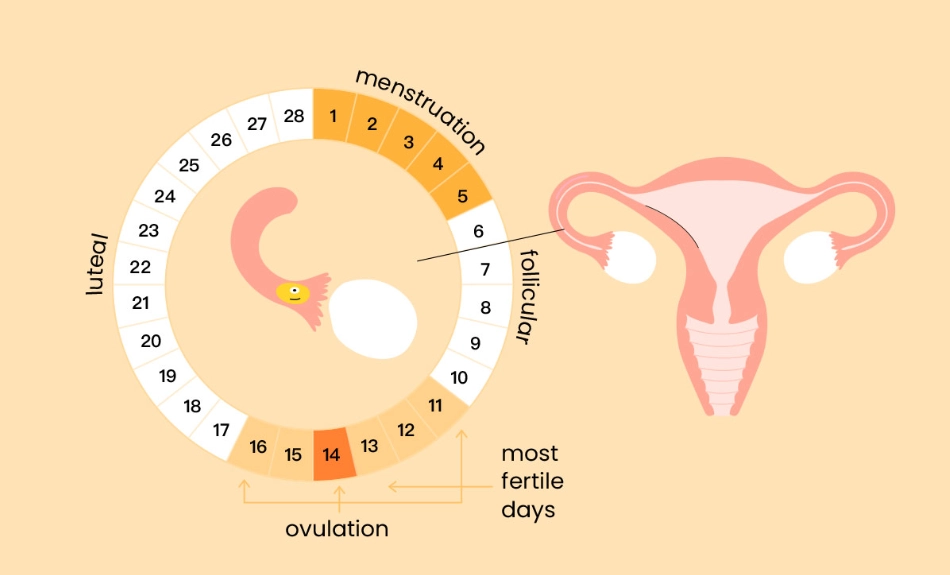
What Are the Phases of the Menstrual Cycle?
Understanding the four phases turns your cycle from a mysterious monthly event into a predictable biological process. It's not just about bleeding or not bleeding.
1. Menstrual Phase (Your Period)
Day 1 is the first day of full red flow, not spotting. This is your body shedding the uterine lining because pregnancy didn't occur. Cramps happen because the uterus contracts to help expel the tissue.
2. Follicular Phase
This starts on Day 1 too and overlaps with your period. Your brain (pituitary gland) sends out Follicle-Stimulating Hormone (FSH), telling the ovaries to start preparing eggs. Multiple follicles begin to develop, but usually only one becomes the dominant "frontrunner." The length of this phase is the most variable part of your cycle. This is why cycle lengths differ.
3. Ovulation
The main event. A surge of Luteinizing Hormone (LH) triggers the release of the mature egg from its follicle. This happens about 14 days *before* your next period (not necessarily in the middle of a cycle). If you have a 35-day cycle, you likely ovulate around day 21. If you have a 21-day cycle, you might ovulate around day 7.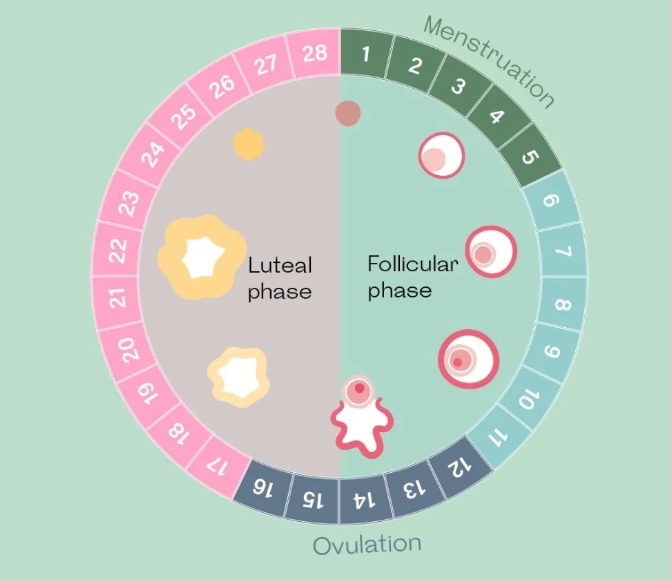
4. Luteal Phase
After releasing the egg, the empty follicle transforms into the corpus luteum, which pumps out progesterone. This hormone thickens and stabilizes the uterine lining, preparing it for a potential pregnancy. This phase is remarkably consistent, typically lasting 10 to 16 days (with 12-14 being most common). If no pregnancy occurs, the corpus luteum disintegrates, progesterone drops, and the lining sheds—hello, Day 1 again.
See how the luteal phase is the anchor? That's why the "14 days before your period" rule for ovulation is more reliable than the "day 14" myth.
How to Track Your Cycle Like a Pro
Ditching guesswork is the first step to understanding your normal. Don't just mark the first day of your period in a calendar app and call it a day. That's like only noting when you leave on a trip, not the journey itself.
Go beyond the period tracker app. Most apps just predict based on past averages. For true insight, you need to input symptoms. Note things like:
- Cervical fluid: Egg-white, stretchy discharge around ovulation; dry or sticky after.
- Basal Body Temperature (BBT): A slight, sustained rise (about 0.5°F) after ovulation confirms it happened.
- Secondary signs: Mittelschmerz (one-sided ovulation pain), breast tenderness, mood shifts, libido changes.
Tracking for just 3 cycles can reveal your personal pattern. You'll see if your luteal phase is a solid 13 days, or if your follicular phase tends to lengthen under stress. This data is gold if you ever need to see a doctor about irregularities.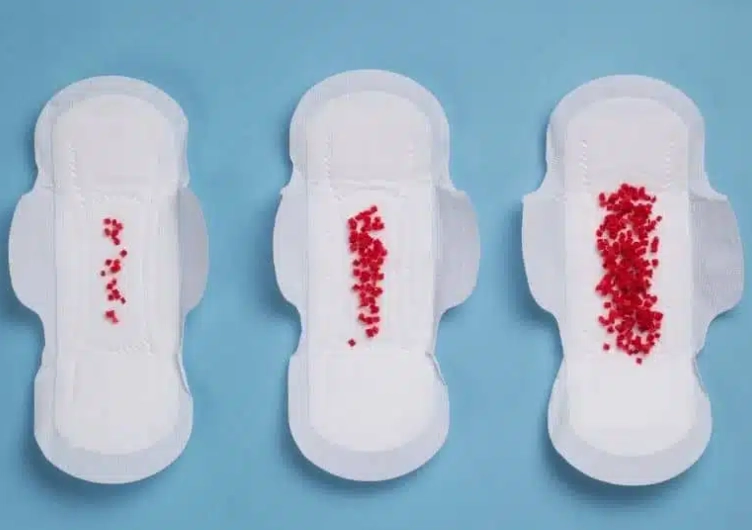
One subtle error? People often mistake post-ovulation spotting for an early period. If you see light brown or pink discharge 3-7 days before your full flow is due, that's likely implantation spotting or a mid-luteal phase estrogen dip. It doesn't reset your cycle count. Your true Day 1 is the start of fresh, red flow requiring protection.
When Should You Talk to a Doctor About Your Period?
"Normal" has wide boundaries, but there are clear red flags that mean it's time for a professional opinion. Don't let anyone dismiss your concerns with "it's just stress" if these patterns persist.
Schedule a visit if you experience:
- Consistently missing periods: No period for 90 days or more (amenorrhea) if you're not pregnant, breastfeeding, or in menopause.
- Very frequent periods: Cycles consistently shorter than 21 days.
- Very heavy bleeding: Needing to change a pad or tampon every 1-2 hours for several hours, or passing clots larger than a quarter regularly.
- Severe pain: Pain that incapacitates you and isn't relieved by over-the-counter meds (could indicate conditions like endometriosis).
- Bleeding between periods or after sex: This needs evaluation to rule out cervical or uterine causes.
- A sudden, major change in your established pattern: If you've always been like clockwork at 30 days and suddenly start having 45-day cycles for several months in a row.
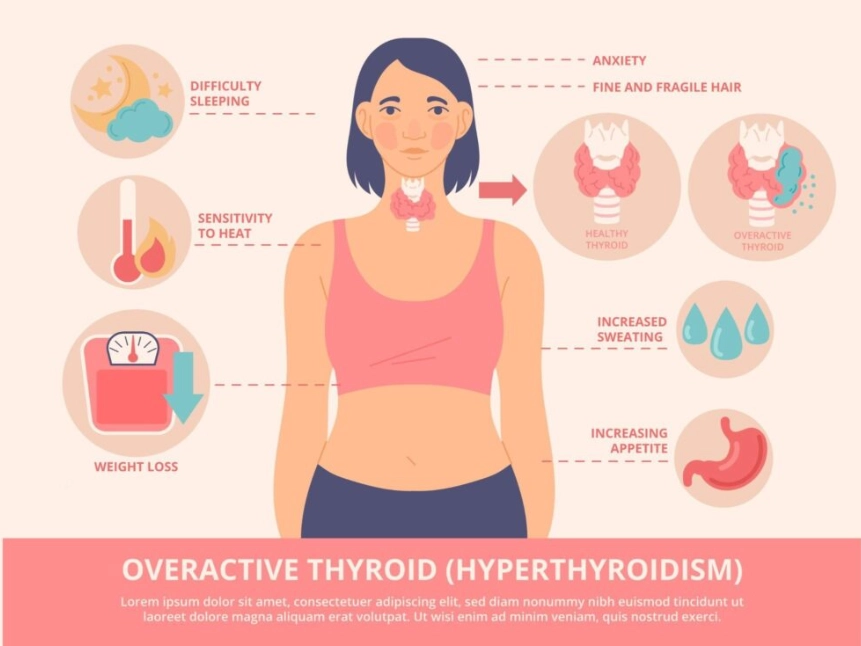
Conditions like Polycystic Ovary Syndrome (PCOS), thyroid disorders, or uterine fibroids can disrupt your cycle. A good doctor won't just prescribe birth control to "regulate" you without investigating the root cause first. Ask for specific tests like thyroid panels, hormone checks (FSH, LH, testosterone, AMH), and possibly an ultrasound.
Your period is a vital sign, a monthly report card on your overall health. Learning its unique language—its length, rhythm, and symptoms—empowers you to know what's truly normal for you and when to seek help.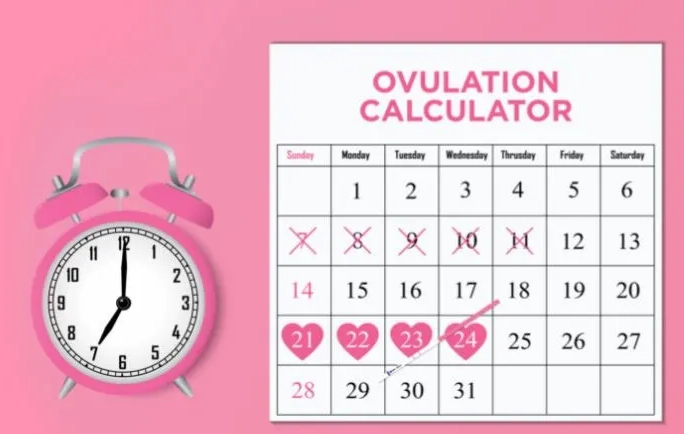

Leave a comment