Marriage Counseling: A Complete Guide to Rebuilding Your Relationship
What to Expect in This Guide
- What Is Marriage Counseling, Really?
- When Should You Consider Couples Therapy?
- How to Find the Right Marriage Counselor
- What Actually Happens in a Session?
- Different Types of Marriage Counseling Professionals
- Common Questions About Marriage Counseling
- What You Can Do Before Your First Appointment
- Alternatives and When Counseling Might Not Be the Answer
- Taking the First Step
Let's be honest. The idea of sitting in a room with a stranger and talking about your marriage can feel... weird. Awkward. Maybe even a little terrifying. You might picture a stern-faced person judging you, or worse, taking sides. I get it. I had those exact same thoughts before my partner and I first walked into a therapist's office.
But here's the thing nobody tells you: marriage counseling isn't about blame. It's not about finding out who's "right." It's more like hiring a translator for a language you both speak but somehow keep misunderstanding. You're both trying to say "I care," but it comes out as "You never listen!" The counselor helps you hear the care behind the complaint.
This guide is for anyone who's typed "marriage counseling near me" into Google with a mix of hope and dread. We're going to cut through the jargon and the stigma. We'll talk about what it actually is, how to find someone good (and how to spot someone not-so-good), what you'll actually *do* in those sessions, and whether it can really help. No fluff, no sugar-coating. Just the stuff you need to know to make a decision for your relationship.
What Is Marriage Counseling, Really? (Spoiler: It's Not What You See on TV)
Forget the dramatic TV show versions. Modern marriage counseling, or couples therapy, is a structured process where a trained professional helps two people understand and resolve conflicts, improve their relationship, and navigate life's challenges together. Think of your counselor as a coach for your relationship's team.
They provide a safe, neutral space—a "container" for the hard conversations you can't seem to have at home without it blowing up. Their job isn't to give you the answers. A good one will never tell you to "just get a divorce" or "just stay together." Their job is to give you the tools and insights to build the relationship you both want.
The Core Idea: Most couples come in focused on changing their *partner*. "If only they would stop doing X, we'd be fine." Marriage counseling gently shifts the focus to changing the *interaction* between you. It's the space between you that needs repair, not just one person.
There are several main approaches, and a good therapist often blends them. You might hear terms like Gottman Method (big on research and practical skills), Emotionally Focused Therapy (EFT) (focuses on the emotional bonds and attachment), or Imago Relationship Therapy (looks at how childhood patterns play out in your marriage). The specific label matters less than finding a therapist whose style clicks with you both.
When Should You Consider Couples Therapy?
This is a big one. A lot of people think you only go to marriage counseling as a last resort, when you're on the brink of splitting up. That's like only going to the doctor when you need emergency surgery. It works sometimes, but it's a much harder, longer road.
So, when is the "right" time? Honestly, earlier is almost always better. Here are some signs it might be time to look for a counselor:
- You're Having the Same Fight on Repeat: The topic changes—money, kids, chores, in-laws—but the painful, circular pattern is always the same. You know exactly how it will end (with someone slamming a door or giving the silent treatment).
- Communication Has Broken Down: You don't talk about anything important anymore. It feels easier to avoid topics than to risk an argument. Or, all your conversations are purely transactional ("Did you pay the bill?"). The friendship part of your marriage is fading.
- There's Been a Betrayal or Major Stressor: This includes infidelity, but also things like a severe illness, the death of a child, job loss, or a major move. These events can crack the foundation of even strong relationships.
- You Feel Lonely in Your Marriage: You live together, you might sleep in the same bed, but you feel profoundly alone and disconnected. That emotional loneliness can be more painful than being physically alone.
- You're Considering Separation: Even if you're thinking about it, therapy can provide a structured way to explore that decision. It can help you separate in a healthier way if that's the path, or it might reveal a path to reconnect.

Waiting until you're completely emotionally drained makes the work much harder.
From my own experience, we waited too long. We were in that "same fight on repeat" loop for years, thinking we could logic our way out of it. We couldn't. By the time we started, there was a lot of resentment to unpack. Starting earlier would have saved us a lot of heartache.
How to Find the Right Marriage Counselor (This Step is Crucial)
Not all therapists are created equal, and a bad fit can make things worse. You wouldn't hire the first contractor you find without checking their work, right? Same principle applies here.
First, understand the credentials. Look for licensed professionals with specific training in couples therapy. Common licenses include:
- LMFT: Licensed Marriage and Family Therapist. This is their specialty.
- LCSW or LICSW: Licensed Clinical Social Worker. Many have excellent training in systems and relationships.
- PhD/PsyD: Psychologist. They often bring deep assessment and research-based skills.
- LMHC/LPC: Licensed Mental Health/P professional Counselor.

Where to look? Start with professional directories like the one from the American Association for Marriage and Family Therapy (AAMFT). Psychology Today's therapist finder is also a popular tool. Ask for referrals from your primary care doctor or a trusted friend (if they're comfortable sharing).
Now, the most important part: the consultation call. Almost every good therapist offers a free 15-20 minute phone or video chat. Use it. This isn't just for them to screen you; it's for YOU to interview THEM. Prepare a few questions.
Red Flags in a Therapist: If a counselor guarantees they can save your marriage, seems to take one partner's side immediately, shares excessive personal details, or dismisses your concerns, thank them for their time and keep looking. A good therapist remains neutral and focused on the relationship system.
Ask questions like: "What is your typical approach to working with couples like us?" "How do you handle situations where one partner is more hesitant than the other?" "What are your policies on confidentiality between individual and joint sessions?" Their answers will give you a feel for their style.
Trust your gut. Do you both feel a basic sense of safety and respect from this person? If one of you is strongly against a particular therapist, listen to that. The alliance between the couple and the therapist is the single biggest predictor of success in marriage counseling.
What Actually Happens in a Session? Demystifying the Process
The unknown is scary. Let's walk through a typical arc, from the first scary session to the later work.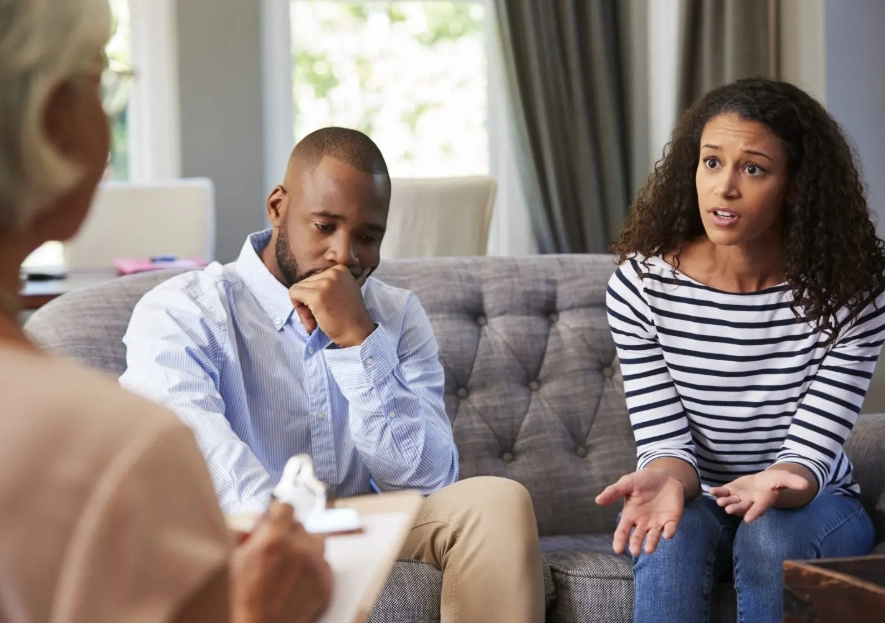
The First Few Sessions: Assessment and History
The first meeting is usually with both of you. The therapist will explain their process, policies, and get an overview of what brought you in. They'll want to hear from each of you. Then, they will likely want to meet with each of you individually for one session. This is standard. It allows them to hear each person's perspective, background, and any individual concerns (like personal mental health history) privately. It also helps build a one-on-one connection. Everything you say individually is typically confidential from your partner, unless it involves a direct threat of harm. They should explain their confidentiality rules clearly.
The Middle Phase: The Work
This is where you dive into the patterns. The therapist will help you identify your "cycle." For example: Partner A criticizes to feel heard -> Partner B withdraws to avoid conflict -> Partner A feels abandoned and criticizes more -> Partner B withdraws further. Seeing this dance mapped out objectively can be a lightbulb moment.
You'll learn new skills. This is the practical part. You might role-play a difficult conversation in the room. You'll learn about "I" statements ("I feel hurt when I see dirty dishes piling up" vs. "You are so lazy!"). You might get "homework"—simple tasks to practice between sessions, like scheduling a 20-minute stress-reducing conversation or expressing one appreciation per day.
The therapist acts as a moderator, slowing down conversations, pointing out when someone is becoming flooded (overwhelmed by emotion), and helping you both express underlying feelings (like fear or sadness) instead of just surface anger.
The Later Phase: Integration and "Graduation"
As you get better at using the tools on your own, sessions may become less frequent. The goal isn't to be in therapy forever. The goal is to internalize the skills so you can be your own relationship first-aid kit. You'll know you're nearing the end when your conflicts at home start to feel different—shorter, less intense, more resolvable.
You and your therapist will discuss termination. A good ending is planned, not abrupt. It gives you space to reflect on the progress and solidify your gains.
Different Types of Marriage Counseling Professionals
It helps to know the landscape. Here’s a quick breakdown of who does what.
| Credential | Focus & Training | Good For Couples Who... |
|---|---|---|
| Licensed Marriage & Family Therapist (LMFT) | Specialized training in relationship systems, family dynamics, and couples interventions. This is their bread and butter. | Want a specialist focused purely on the relationship dynamic and communication patterns. |
| Licensed Clinical Social Worker (LCSW/LICSW) | Training in therapy within a social context. Often skilled in systems thinking, practical problem-solving, and accessing community resources. | Are dealing with external stressors (financial, family, health) that are impacting the marriage, and want a practical, resource-oriented approach. |
| Psychologist (PhD/PsyD) | Extensive training in assessment, diagnosis, and research-based therapies. May do deeper individual psychological work. | Have complex individual mental health issues (e.g., trauma, severe anxiety) intertwined with relationship problems, or want psychological testing. |
| Licensed Professional Counselor (LPC/LMHC) | Broad training in mental health counseling. Many pursue additional training in couples work. | Should carefully vet the therapist's specific post-graduate training and experience in couples therapy, as it varies widely. |
The letters after the name matter, but the therapist's specific experience, personality, and approach matter more. Don't get too hung up on the title alone.
It's okay to ask these questions directly. A good therapist won't be offended.
What You Can Do Before Your First Appointment
Feeling proactive can ease the anxiety. You don't have to walk in empty-handed.
- Talk to Your Partner About Hopes (Not Just Complaints): Instead of just listing what's wrong, try to each share one small hope. "I hope we can laugh more easily." "I hope we can talk about money without a fight." This sets a more constructive tone.
- Jot Down Notes: When you think of an example of a recent conflict or a recurring issue, write a brief note. Memory goes blank in that first session. Having a few bullet points can help.
- Discuss Practicalities: Figure out logistics—budget, schedule, who will handle the initial calls. Getting aligned on the practical stuff reduces friction before you even start.
- Manage Your Expectations: The first session won't fix anything. It might even feel tense or surface-level. That's normal. The goal of the first meeting is just to show up and begin.
"The quality of your relationship is determined by the quality of your conversations." – That's not from some famous guru, it's just a truth you learn in the therapy room. How you talk about not talking is often the first conversation you'll have.
Alternatives and When Counseling Might Not Be the Answer
Marriage counseling isn't a magic wand, and it's not for every situation. Sometimes, other steps need to come first.
If there is ongoing, unaddressed domestic violence, substance abuse, or an active affair where there is no remorse or intention to stop, standard couples therapy is often not recommended and can even be dangerous. In these cases, individual therapy, addiction treatment, or specialized programs for abuse are necessary first steps to establish safety.
What are some alternatives or supplements?
- Marriage Workshops or Retreats: Like the PREP or Gottman workshops, these are often weekend-intensive skill-building programs. They can be a great jump-start or a less intimidating first step.
- Self-Help Books & Resources: Books like "The Seven Principles for Making Marriage Work" by John Gottman or "Hold Me Tight" by Sue Johnson (based on EFT) can provide fantastic insights and exercises. They work best when both partners are readers and do the exercises together.
- Online Therapy Platforms: Services like Regain or Talkspace offer couples therapy via video or text. The convenience is great, but the depth can be limited compared to in-person work, especially for complex issues.
Sometimes, the bravest and healthiest outcome of exploring marriage counseling is realizing you need to end the relationship with as much care as possible. A good therapist can help with that too—it's called "discernment counseling" or "therapy for uncoupling."
I'll add a personal opinion here: the self-help industry can sometimes oversimplify things. A book can give you a map, but a therapist helps you navigate the actual, messy terrain of your unique relationship. If you've tried the books and you're still stuck, that's a clear sign to bring in a professional.
Taking the First Step
If you've read this far, you're already doing the work. You're gathering information, which is the first, most concrete step. The idea of marriage counseling can feel heavy, but the action itself can be simple.
Maybe today, you just bookmark the AAMFT therapist directory. Maybe you say to your partner, over coffee, "I was reading about couples therapy, and I wondered what you think about it. No pressure to decide anything, I'm just curious." That's it. That's a start.
The journey through marriage counseling isn't easy. It requires vulnerability, courage, and a willingness to look at your own contributions to the problems. But for countless couples, it has been the thing that turned a dying dialogue into a new conversation. It provided the tools to rebuild not just a marriage, but a deeper, more understanding friendship.
Your relationship's story isn't over. The next chapter might just need a different kind of author—the two of you, with a little bit of expert help.
POST A COMMENT